

ACL reconstruction
Rebuilding the ligament that helps keep your knee stable when you turn.
An ACL tear can be frightening, particularly if you are active and have been told that surgery is the obvious next step.
It isn’t always.
The important question is not simply “Is the ACL torn?”
It is:
“Is your knee unstable in the life you actually want to lead?”
What getting back to your life can look like
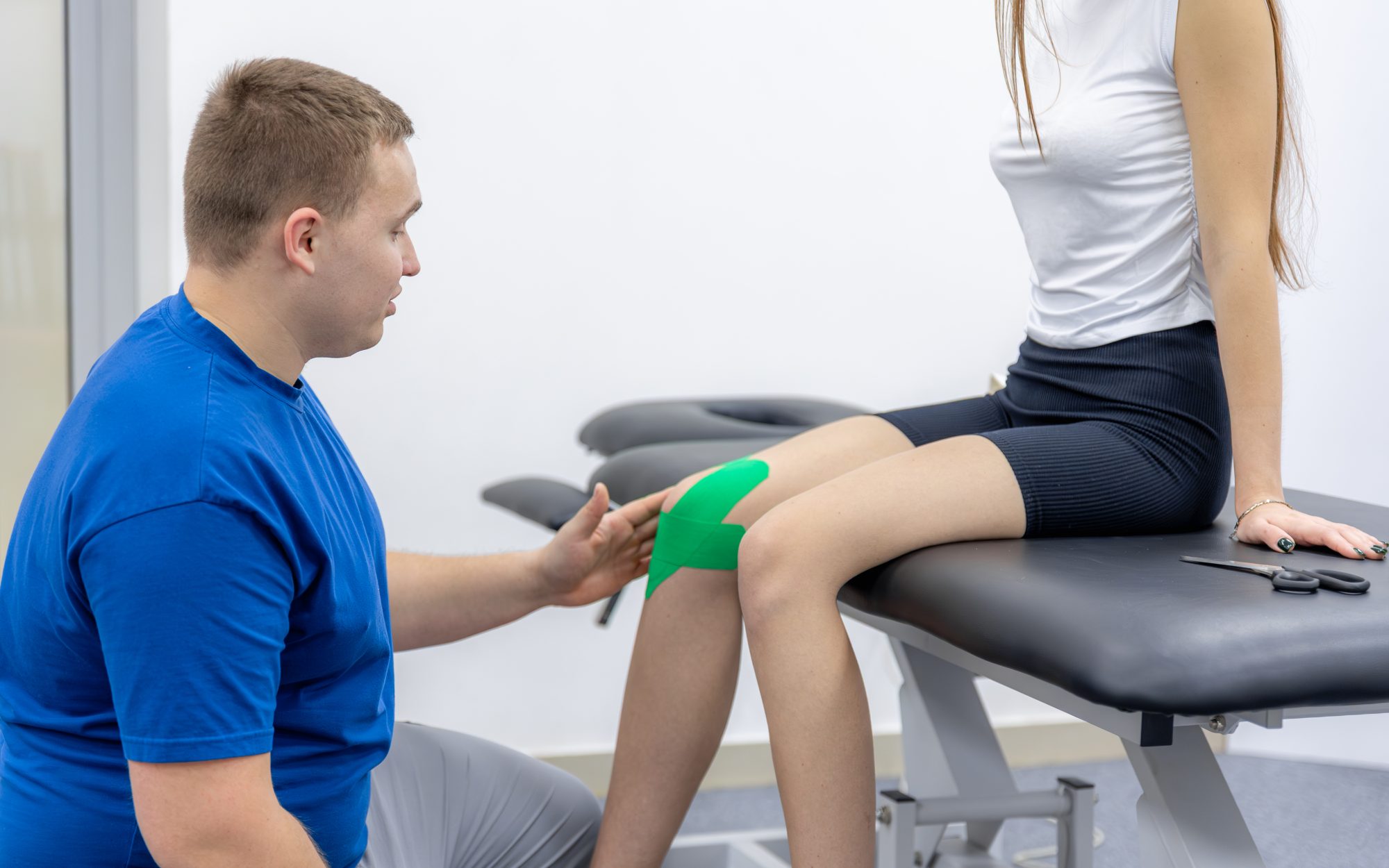
ACL recovery is a long rehabilitation rather than a single operation.
The pathway generally progresses through:
- Early recovery: controlling swelling, restoring full extension and beginning physiotherapy.
- Building strength: progressively restoring quadriceps and hamstring strength.
- Returning to everyday activity: walking, driving and work as the knee allows.
- Running: introduced when strength, movement and control are sufficient.
- Return to sport: cutting, pivoting, landing and sport-specific training come later.
The calendar is only one part of the decision.
Your strength, movement, confidence and functional testing matter more than simply reaching a particular month.
Your individual milestones will be discussed before and during rehabilitation.
In ordinary words
The anterior cruciate ligament, or ACL, is one of the main stabilising ligaments inside the knee.
It helps control the movement of the shin bone relative to the thigh bone, particularly when you turn, pivot or land.
Many people do not notice the ACL itself.
They notice what happens when the knee is unstable:
the knee gives way.
A completely torn ACL has limited ability to restore its original function on its own. When reconstruction is appropriate, a new ligament is created using a tendon graft and positioned to reproduce the function of the original ACL.
Do you actually need reconstruction?
A torn ACL does not automatically mean surgery.
We consider:
- whether your knee gives way
- the activities and sports you want to return to
- associated meniscus or cartilage injuries
- your age and physical demands
- your goals
- your response to rehabilitation
If you regularly play football, badminton, basketball, kabaddi or another sport involving cutting, pivoting or landing, instability may make reconstruction more appropriate.
On the other hand, someone whose activities are mainly walking, cycling and swimming and whose knee remains stable may function very well without reconstruction.
A 55-year-old who plays badminton several mornings a week may have a stronger reason for reconstruction than a 28-year-old who does not participate in pivoting sports.
Age matters. But what you ask your knee to do matters too.
What happens if you do not have reconstruction?
A structured rehabilitation program can improve strength, movement and neuromuscular control.
Some people become sufficiently stable that reconstruction never becomes necessary.
The important thing to assess is whether the knee remains stable during the activities that matter to you.
If the knee repeatedly gives way, the concern is not simply the torn ACL. Repeated instability can put the meniscus and cartilage at risk.
So if your knee is genuinely unstable, waiting is not a neutral decision.
If your knee is stable and functioning well, rehabilitation may be a very reasonable first step.
What does ACL reconstruction involve?
ACL reconstruction is usually performed through small keyhole incisions.
A tendon graft is prepared and positioned through tunnels in the thigh bone and shin bone to recreate the course of the original ligament. The graft is then secured in place.
The graft may be taken from your own hamstring, patellar tendon or another appropriate source depending on your circumstances.
Most patients go home the same day or after a short stay.
The early pain is often manageable. The harder part is the length and discipline of rehabilitation.
The graft needs time to biologically incorporate and the knee needs to regain strength, movement, coordination and confidence before returning to sport.
Returning simply because the calendar says you can is not the goal. Returning because your knee is ready is.
Questions patients ask
01 Which graft is better—hamstring or patellar tendon?
The choice depends on your sport, occupation, age, kneeling requirements, associated injuries and the demands you place on the knee.
If you kneel frequently at work or for prayer, for example, that becomes part of the discussion.
We will explain the advantages and disadvantages of the options rather than simply giving everyone the same graft.
02 Can I still play without ACL reconstruction?
The key question is whether the knee remains stable when you do the activities you want to return to.
A structured rehabilitation program and functional assessment can help determine whether your knee can meet those demands without reconstruction.
---