

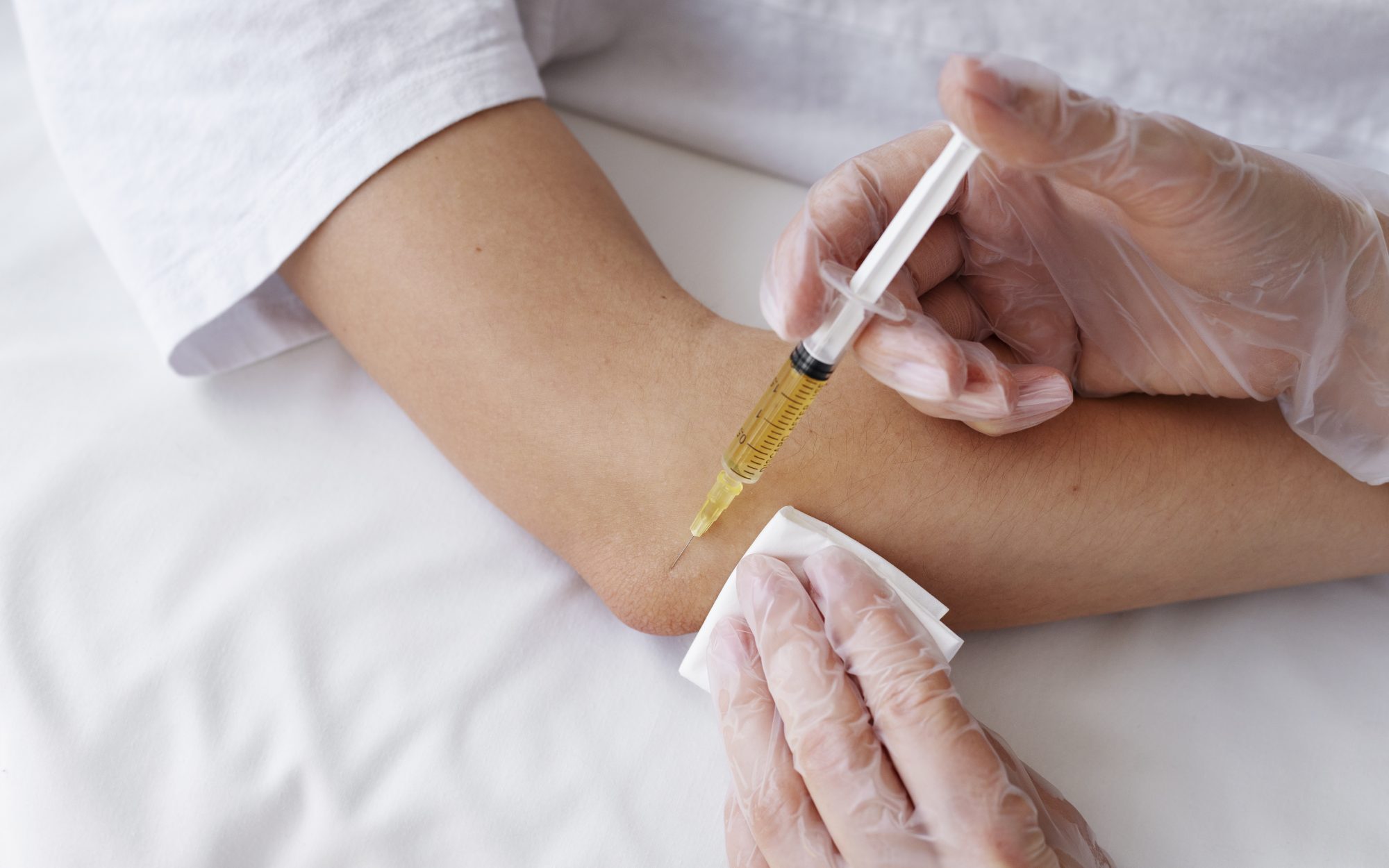
Joint injections
A treatment tool with a purpose—not a substitute for a treatment plan.
An injection can sometimes make a painful joint easier to use, settle inflammation or help clarify where pain is coming from.
But an injection should have a reason.
Why are we giving it? What are we hoping it will achieve? And when will we review whether it worked?
Those questions should have an answer before the injection is given.
What getting back to your life can look like
An injection is usually an outpatient procedure.
- The day of the injection: the procedure is performed and you normally go home the same day.
- Early period: heavy loading may need to be reduced briefly.
- Review: we assess how much difference the injection has made.
- Next step: continue, modify or change the treatment plan depending on your response.
There is no point in giving an injection and simply hoping it helps.
There should be a reason, an expected benefit and a plan for what comes next.
In ordinary words
An injection places medication into or around a joint or other painful structure.
Depending on the diagnosis, this may include a corticosteroid to reduce inflammation or another medication used for specific indications.
The choice depends on what is actually causing your symptoms.
An injection can reduce symptoms, but it does not automatically correct the underlying cause.
Sometimes its greatest value is creating a period in which you can move more comfortably and participate properly in rehabilitation.
Do you need an injection?
We consider an injection when there is a specific purpose for it.
For example:
- reducing pain enough to allow effective rehabilitation
- treating inflammation
- helping determine the source of pain
- managing symptoms when surgery is not currently appropriate
An injection should not be offered simply because there is nothing else to say.
If surgery is genuinely required, an injection may delay the decision without changing the underlying problem.
Repeated steroid injections also have potential disadvantages, so frequency and timing need to be considered carefully.
What happens if you do not have an injection?
Often, nothing urgent happens.
Strengthening, load management, activity modification and time may allow the joint to improve without an injection.
For some people, that is the better route.
The injection is therefore not automatically a necessity. It is one tool that may make the overall treatment plan easier to carry out.
What does an injection involve?
The area is cleaned carefully and the medication is delivered to the intended location.
Ultrasound guidance may be used when it improves accuracy for the particular injection.
You will usually go home the same day.
Your post-injection instructions depend on what was injected and where.
Questions patients ask
01 How many injections can I have?
Repeated steroid injections into the same area are not without potential disadvantages. If you find yourself needing injections repeatedly, that is a reason to reassess the overall treatment plan rather than simply repeating the same step.
02 Will an injection cure arthritis?
An injection may reduce symptoms for a period, but it does not reverse established arthritis.
Its value may be in helping you move more comfortably, exercise and strengthen the joint, or manage symptoms when surgery is not yet appropriate.
---