

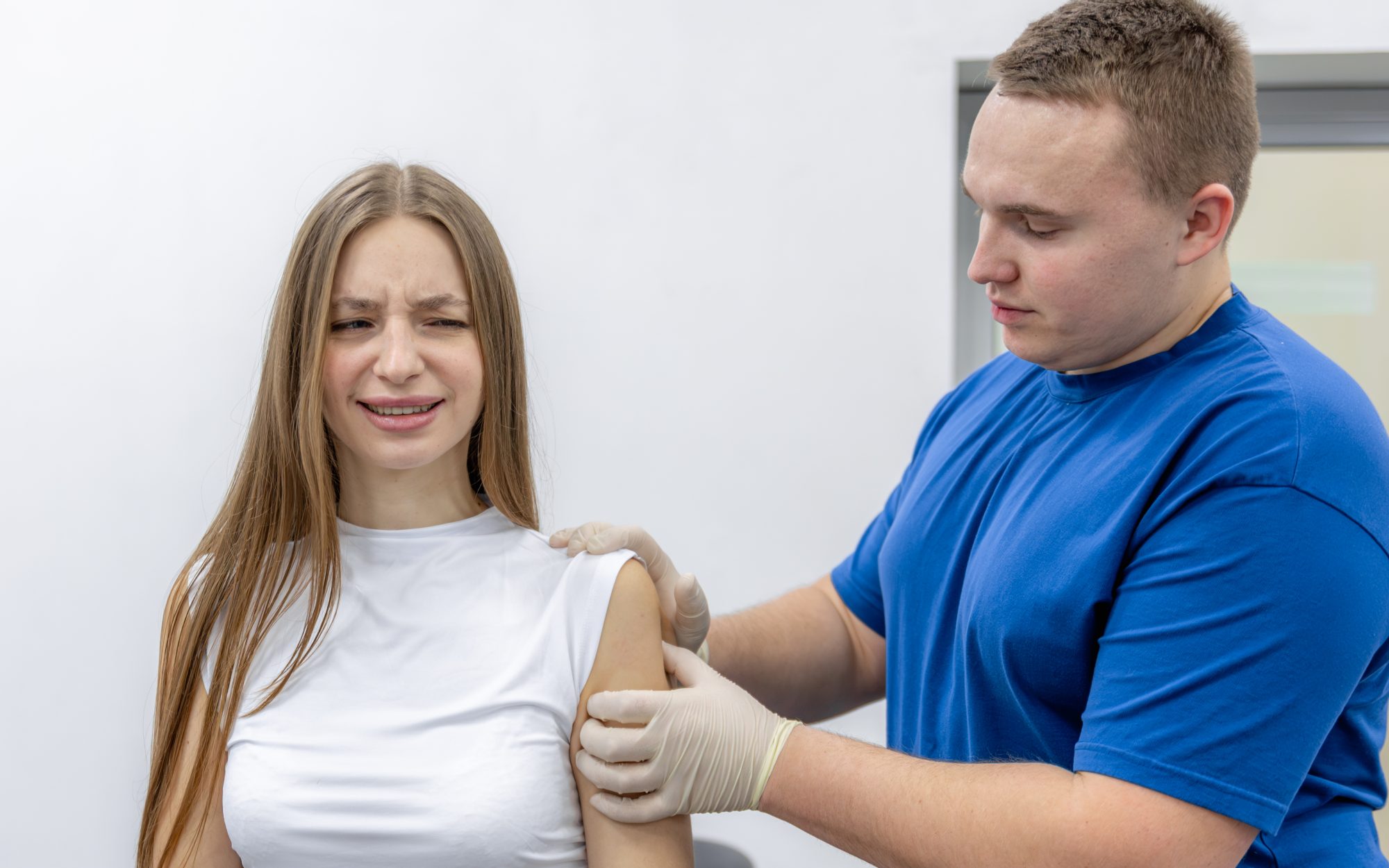
Rotator cuff repair
Reattaching the tendons that help you lift and rotate your arm.
You may notice shoulder pain at night, difficulty reaching overhead, weakness when lifting your arm, or an increasing inability to do things that were previously routine.
A rotator cuff tear on an MRI does not automatically mean you need surgery.
The first question is whether the tear explains your symptoms and whether the shoulder can function well without repairing it.
What getting back to your life can look like
Rotator cuff repair is a healing procedure, and the repaired tendon needs protection during the early weeks.
Your recovery will usually progress through stages:
- Protection: the arm is supported in a sling while the repair begins to heal.
- Movement: the shoulder is gradually moved according to the repair and rehabilitation protocol.
- Active use: you progressively regain the ability to lift and use the arm yourself.
- Strength: strengthening begins when the tendon is sufficiently healed.
- Return to work, overhead activity and sport: introduced progressively according to strength, movement and function.
The exact timing depends on the size and quality of the tear, the repair and your individual recovery.
You will be given your expected milestones in writing rather than being asked to guess what recovery will involve.
In ordinary words
The rotator cuff is a group of four tendons that help keep the shoulder joint centred and allow you to lift and rotate your arm.
Tears can develop gradually with age and wear, or occur suddenly after an injury such as a fall.
People often notice difficulty lifting the arm, weakness, pain with overhead activity or pain that becomes particularly troublesome at night.
Repair means reattaching the torn tendon to the bone using small fixation devices called anchors.
Do you actually need a repair?
The decision depends on several factors:
- the size and type of tear
- how long the tear has been present
- the quality of the tendon
- the condition of the muscle
- your strength and function
- your age and activity level
- what you need your shoulder to do
A smaller tear with preserved strength may respond well to physiotherapy and may never require surgery.
A larger tear associated with significant weakness is a different situation. With time, some tears can enlarge and the associated muscle can lose quality, eventually making repair more difficult or impossible.
That is why timing matters for some tears—but not every tear needs to be operated on immediately.
We will tell you which situation you are in.
What happens if you do not have surgery?
A properly supervised rehabilitation program can improve pain, strength and shoulder function.
Physiotherapy works on the remaining rotator cuff, shoulder-blade muscles and movement patterns. In selected patients, an injection may also be considered if pain is preventing effective rehabilitation.
This approach can work particularly well for some partial tears and smaller tears where the shoulder remains functional.
It will not, however, reattach a tendon that has completely pulled away from its attachment.
The question is therefore not simply “Can I avoid surgery?”
It is:
“Can my shoulder give me the function I need without surgery, and what are the consequences of waiting?”
Non-surgical treatment avoids the restrictions and rehabilitation associated with surgery.
Repair restores the tendon attachment but requires a longer period of protection and rehabilitation.
For some patients, avoiding surgery is entirely reasonable.
For others, delaying too long may reduce the possibility of a successful repair.
The right answer depends on the individual shoulder.
What does rotator cuff repair involve?
The procedure is usually performed through small keyhole incisions.
The torn tendon is assessed, the attachment site on the bone is prepared, and the tendon is secured back to the bone using anchors.
A general anaesthetic and regional nerve block may be used, depending on your individual circumstances and the anaesthetic plan.
Most patients go home the same day or after a short stay.
The early weeks are often the most restrictive. The repaired tendon cannot safely be used for active lifting while it heals, so the arm is protected in a sling and movement is progressed according to the rehabilitation protocol.
This can affect much more than exercise.
Sleeping, dressing, bathing, driving and simple household activities may all be different for a while.
Knowing that before surgery is part of making an informed decision.
Questions patients ask
01 How long will I really need the sling?
It is often longer than patients expect, and it is one of the more difficult parts of recovery.
You will be given an individual plan rather than a generic promise.
02 Will the night pain disappear immediately?
Pain often improves progressively, but the shoulder can remain uncomfortable during the early healing period and the sling can make sleeping difficult.
Many patients find sleeping slightly propped up more comfortable initially.
---