

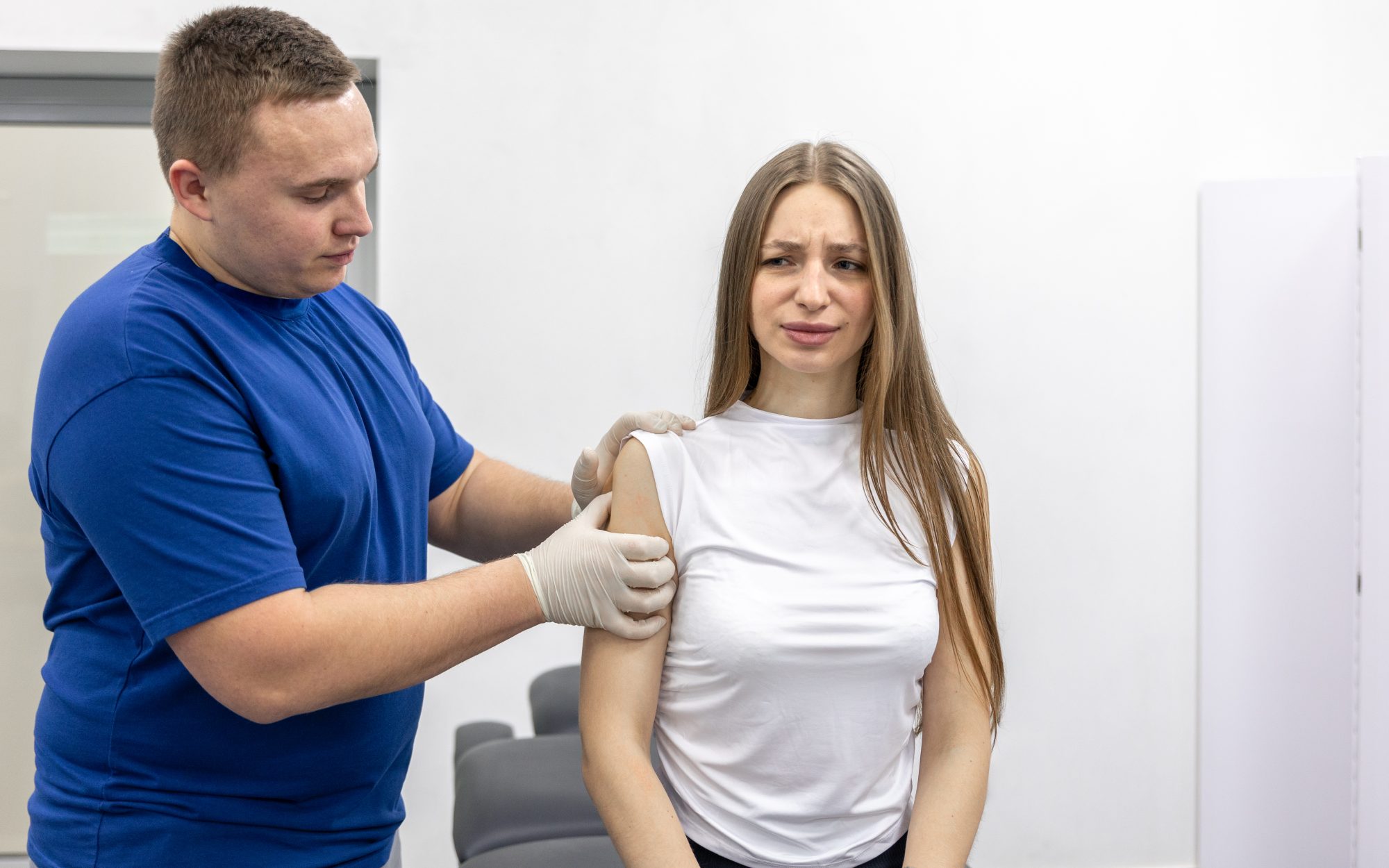
Shoulder stabilisation
For a shoulder that keeps slipping out of its socket.
A shoulder dislocation can be a one-time event—or the beginning of a shoulder that repeatedly feels as though it is going to slip out.
The right treatment depends on why it happened, your age, how often it has happened and what you need your shoulder to do.
What getting back to your life can look like
After stabilisation, the shoulder needs time to heal before it is challenged again.
Recovery usually progresses through:
- Protection: the arm is supported in a sling.
- Movement: range of motion is restored progressively.
- Strength: the rotator cuff and shoulder-blade muscles are strengthened.
- Confidence: the shoulder is gradually exposed to the positions that previously caused instability.
- Sport: contact, overhead and vulnerable positions are reintroduced only when the shoulder is ready.
Your exact milestones depend on the repair and your individual rehabilitation.
In ordinary words
The shoulder has an enormous range of movement, but that mobility comes at the cost of stability.
When the shoulder dislocates, the soft tissues that help keep the ball centred in the socket can be damaged.
People often describe the shoulder as “going”, slipping or feeling as though it might come out again—sometimes while reaching backwards, putting on a shirt or participating in sport.
Shoulder stabilisation aims to repair the damaged structures and restore stability.
Do you actually need stabilisation surgery?
The decision depends on:
- your age at the first dislocation
- how many times the shoulder has dislocated
- what caused the dislocation
- the sport and activities you want to return to
- damage to the labrum and ligaments
- bone loss from the socket or ball
- the overall condition of the shoulder
A young patient involved in contact or collision sport has a very different recurrence risk from an older patient whose shoulder dislocated during an accident.
Significant bone loss can also change the operation required. In those situations, a simple soft-tissue repair may not provide enough stability.
The operation has to fit the shoulder—not the other way around.
What happens if you do not have surgery?
After a first dislocation, particularly in an older patient or someone whose activities place relatively little stress on the shoulder, rehabilitation may be an appropriate first step.
Physiotherapy focuses on the rotator cuff, shoulder-blade muscles, movement and control.
The decision becomes different when instability is recurrent or when imaging shows significant structural damage.
Repeated dislocations can cause additional damage to the socket and bone and may eventually make a straightforward repair less suitable.
What does shoulder stabilisation involve?
The procedure is usually performed through small keyhole incisions.
The damaged labrum and associated soft tissues are reattached to the edge of the socket using small anchors, and the stretched capsule and ligaments are tightened as required.
General anaesthesia and a regional nerve block may be used.
Most patients go home the same day or after a short stay.
The early weeks are focused on protecting the repair before progressively restoring movement and strength.
Questions patients ask
01 My shoulder has only come out once. Do I need an operation?
The answer depends on your age, how the injury occurred, what you want to return to and whether there is significant damage to the shoulder.
A young contact-sport athlete with a first dislocation may have a very different risk of recurrence from an older person whose shoulder dislocated after a fall.
A proper assessment is more useful than making the decision from the number of dislocations alone.
---